
Equinox
Life in a city under siege

I held off on sending out this newsletter until the arts calendar had rounded the corner on a festival-heavy transition into autumn. But so much has happened in that September and October span that this newsletter may as well be a report from another world. I don’t need to recount those horror stories. You’ve seen the videos, the photos, the national coverage, the terror of a particularly cruel Halloween blitz on Chicago’s north side and suburbs.
But there’s one federal action I don’t want this country to lose sight of, as it tends to when Black people—and especially Black people living under the poverty line—are involved. In the wee hours on Sept. 30, residents of a South Shore apartment building were jolted awake by the sound of federal agents pounding on their doors. Federal agents, including FBI and Border Patrol agents, landed a helicopter on the roof of the building—a five-story brick structure which, it has not been emphasized enough, was not designed to support rotorcraft—and used flashbang grenades to enter the building. Residents were forced out of their units and, according to accounts, zip-tied. Eyewitnesses say that included children, some of whom were naked. Other residents had guns pointed at their faces.
Those included Venezuelan migrants, 37 of whom were reportedly detained. (Naturally, a DHS spokesperson claimed those taken had ties to Tren de Aragua.) The remainder of the zip-tied residents were U.S. citizens. Nearly every unit in the building was accessed—unlawfully, I hasten to add, not like that matters anymore—and left in shambles. Agents used some apartments to corral detainees for hours.
WBEZ and the Chicago Sun-Times have not lost sight of this horrific story, even as the news cycle moves on. Their reporting has subsequently emphasized the squalor in which residents lived—all too common in a city full of predatory landlords. A recent update implies building employees may have tipped authorities off and mapped out which units were occupied by migrants. That story also highlights meaningful acts of bravery, like the resident who sheltered a terrified mother and her child amid the raid.
Often, public outrage leads with the fact that U.S. citizens in Chicago are now being subject to the same dehumanizing treatment as noncitizens. I understand the impulse to scream this fact from the rooftops, perhaps because it unequivocally highlights the Trump regime’s hypocrisy.
But in addition to the unsavory implications—that we as citizens are somehow entitled to more humane treatment—that outrage outs us all as bad students of history. In times like these, what comes for the most vulnerable among us will come for all the rest, if you let it fester long enough.
Do not forget the story of 7500 S. South Shore Drive.
Fests on fests
As mentioned above, the late summer/early autumn gig calendar was full of even more music festivals than usual. My itinerary began with the Chicago Jazz Festival and ran through the Asian American Jazz Festival, celebrating 30 years later this week. Between those were the first edition of Sound & Gravity—a milestone which will inspire many boasting “I was there!”s in years to come—and the Hyde Park Jazz Festival, whose record-breaking attendance and fundraising conquered a daunting federal funding shortfall. (That’s the kind of news we like to hear right now.)
The CheckOut, a new venue occupying a former 7-Eleven, is also calling its first month of programming a “festival.” The space has significant logistical challenges, but as I wrote in the Tribune and Musical America, I’m ultimately a CheckOut optimist — and I’m not usually optimistic about much of anything. And I write this on the heels of the Ear Taxi Festival, an endeavor so massive that I get secondhand exhaustion imagining how much work it must have been to put together.
I covered all of the above for the Chicago Tribune (gift-linked where applicable). The paper generously continues to support my work to fill the Rubin Institute–shaped void discussed a couple newsletters ago. The paper continues to search for another funder to support its classical and jazz coverage long-term.
Many, many causes demand our collective attention right now, but if you’re someone who is interested in seeing my coverage at the paper continue and have/know a nonprofit or foundation which has the means to help, please get in touch. I am not involved in the search for obvious reasons, but the paper itself is accepting leads, and I can connect you.
Selected (non-festival) bylines
Earlier this month, I shadowed elected officials on a tour of Chicago cultural institutions. Illinois House Rep. Kimberly DuBuclet, who organized the outing, is planning further tours to curry fiscal support at the state level, hoping to address the shortfall left by slashed federal programs. (Chicago Tribune)
My musical tastes have morphed since COVID, but Robert Owens’ songs have been a constant. A centenary festival in Lincoln, Neb., brought his music to a wider audience. (New York Times)
Fun coincidence: A teenage Owens played his music publicly for the first time with my former youth orchestra, the Young People’s Symphony Orchestra, in Berkeley.
Count me extremely impressed by the St. Louis Symphony. Its hall redux is gorgeous, the orchestra sounds phenomenal, and it overshot its fundraising goal for the renovation by a staggering $33 million. Plus, their new-works appetite is voracious, with no misses I’ve heard to date. (Musical America)
I reviewed the Sun Ra tribute referenced in my last newsletter, by Sullivan Fortner and his Galactic Friends. (Chicago Tribune)
Drummer/producer Makaya McCraven releases four new EPs on Halloween, from material collected over the past decade. (WBEZ/Sun-Times)
When release day comes, run, don’t walk, to this total banger with Theon Cross and Ben LaMar Gay, two of my favorite living creatives in any genre.
RIP, Berlioz: you would have loved last week’s Mäkelä/Tamestit/CSO concert. (Chicago Tribune)
Miscellany
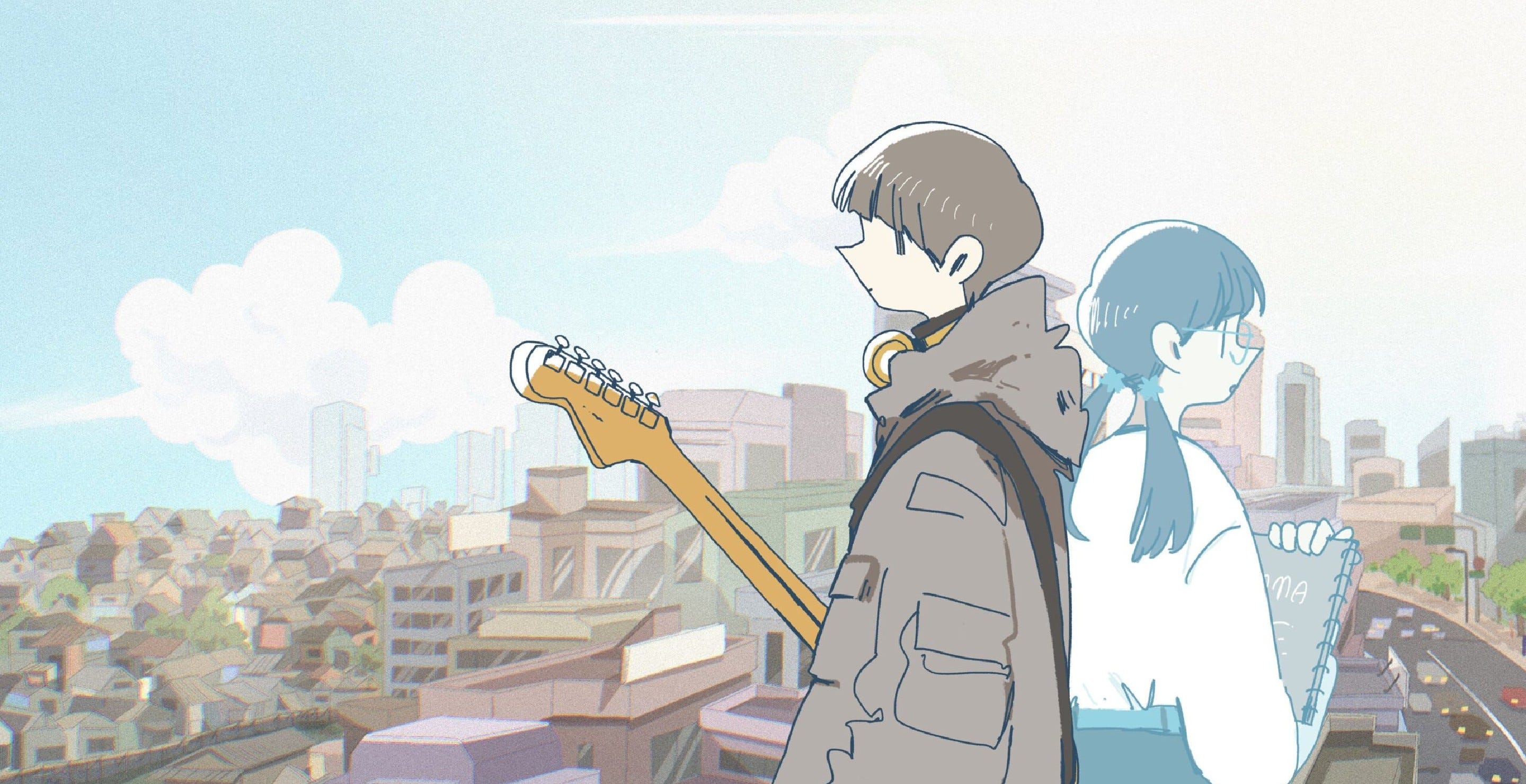
I haven’t had the time to play video games for a while now, but I’m really glad to have sat with Afterlove EP, an indie game which came out earlier this year. During the pandemic, I enjoyed creator Mohammad Fahmi’s Coffee Talk, a cozy visual novel which used its setting (in a fantasy version of Seattle) as a Trojan horse to discuss racism and other social issues. Afterlove is similarly place-based and uncompromising. After his girlfriend’s sudden death, Rama, a young musician in Jakarta, retreats from society. You take the controls a year after that tragedy, when he tries to resurrect his rock band. Tragically, Fahmi himself died of an asthma attack during the game’s early development, adding extra poignancy to the game’s depiction of grief and its ripple effects.
Nota bene: The game starts slow, but this is a feature, not a bug. You regain more agency over Rama’s life, dialogue, and schedule as he heals and confronts his grief.
Plus: The game’s soundtrack was composed and performed by L’Alphalpha, a real Jakarta band referenced in-game.
What a treat it is for the head of a major Chicago arts organization to be a perceptive and thoughtful writer about music. Lyric Opera general director John Mangum, who wrote his dissertation on opera in 18th century Prussia, attended, then wrote about, Haymarket Opera’s Artaserse for The Haymarket Review, that company’s new in-house digital platform.
Mohammed R. Mhawish writes for The New Yorker about Gaza’s next steps—and a doomed peace deal that will keep it in thrall to other powers.
Choice excerpt: “We as Palestinians are often congratulated for our resilience. It has become the badge pinned on us—the costume of the noble victim. Our ability to breathe under rubble is praised as a virtue, when it’s actually an indictment of the world that put us there… To call us resilient is to praise the caged bird while ignoring the cage’s latch.”
Still, and always, Sun Ra
The Arkestra, in a BBC studio performance I’ve somehow missed. Very worth your undivided attention. (Feat. a younger, nerdier Shabaka Hutchings.)
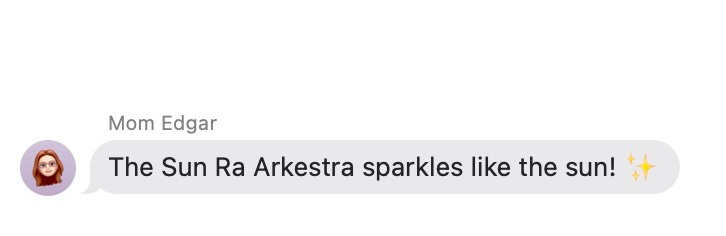
What she said. 💖
Great, update Hannah. I didn’t know about most of this coverage. And shame on the United States right now:
Gotta love Sun Ra!